KKP-TSU Conference 2026: Green Chemistry for a Changing World: Empowering Sustainable Communities
Date: 23 & 24 February 2026
Venue: Tarlac State University, Lucinda Campus, Tarlac City
Jan-Michael C. Cayme, PhD
DOST-PCIEERD Balik Scientist
Department of Chemistry, De La Salle University, Manila
Archaeology Division of the National Museum of the Philippines
Cultural Heritage as a Model for Sustainability: Chemical Analysis of a Tabique Pampango Lime Mortar
Traditional building materials used in cultural heritage structures provide important templates for contemporary sustainable construction. This talk examines the sustainability-related properties of a Tabique Pampango lime mortar through chemical analysis. Tabique Pampango is a vernacular wattle-and-daub wall construction technique historically employed in heritage buildings, particularly church convents in the Philippines. The talk focuses on a mortar sample obtained from a 19th century Spanish Colonial Period church convent in Loboc, Bohol, which was severely damaged during the 2013 earthquake.
A mortar sample was collected and analyzed using multiple analytical techniques, including X-ray fluorescence (XRF), X-ray diffraction (XRD), Fourier Transform Infrared Spectroscopy (FTIR), thermogravimetric analysis (TGA), and sieve analysis, to characterize its chemical composition. The results indicated that the Tabique material is mainly composed of a calcitic lime binder with clay minerals either naturally present in the raw materials or intentionally incorporated using clay-rich soils. The presence of clay minerals in the added soil imparted mild hydraulic properties to the mortar, enabling it to set effectively under moist conditions. Additionally, fine-grained aggregates sourced locally were abundant, rendering the material suitable for non-load bearing applications and ensuring compatibility with timber and earthen substrates.
The talk will show that Tabique Pampango lime mortars reflect important principles of sustainability, including low energy consumption, the use of renewable and locally available materials, and recyclability. Their natural compatibility with historical structures also reduces material waste and limits the need for invasive conservation work. By examining the chemical composition and performance of these traditional mortars, the research demonstrates how local construction knowledge can guide both heritage conservation and the development of sustainable building materials today.
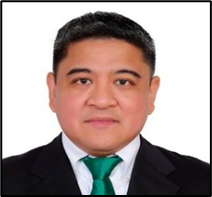
Jan-Michael C. Cayme, RCh, PhD, is an analytical chemist and a cultural heritage chemist specializing in the chemical analysis of historical and archaeological materials. His interdisciplinary research interests bridge chemistry, archaeology, and heritage science, with particular expertise in biomolecular archaeology, clay-based cultural heritage materials, and historical lime mortar technology. Dr. Cayme is currently a DOST-PCIEERD Balik Scientist, hosted jointly by the Chemistry Department of De La Salle University, Manila, and the Archaeology Division of the National Museum of the Philippines. He earned his PhD in Chemistry from the University of Tartu, Estonia, where he conducted his doctoral research under the ARCHEMY (merging archaeology and analytical chemistry) Research Group and the Cultural Heritage Research Group within the Chair of Analytical Chemistry. Dr. Cayme has over a decade of experience in applying chemical techniques to cultural heritage research. §
Academician Fortunato Sevilla III
Professor Emeritus
Department of Chemistry, University of Santo Tomas
Paper-Based Analytical Devices (PAD): A Green Platform for Headspace Measurements Based on Digital Colorimetry
Paper-based analytical devices present a green strategy for chemical measurement in different fields of applications. These are actually chromogenic reagents immobilized on a paper substrate. In the presence of a specific analyte, a color change occurs which can be quantified through digital colorimetry and eventually related to the concentration of the analyte. This approach presents several advantages, such as portability, low cost, real-time analysis minimal, or zero, waste generation. These advantages become more pronounced when PADs are employed in headspace or vapor-phase measurement. This technique has been applied for monitoring spoilage and contamination in food and beverages, pollution in water systems and in indoor air quality of heritage libraries.
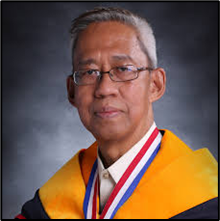
Fortunato Sevilla III is a Professor Emeritus of Chemistry at the University of Santo Tomas in Manila, Philippines. He is an Academician of the National Academy of Science and Technology (Philippines), and a Member Emeritus of the National Research Council of the Philippines. He is a Fellow of the International Union of Pure and Applied Chemistry, the Federation of Asian Chemical Societies, and the Philippine Association for the Advancement of Science and Technology. He is a member of the Board of Directors and chair of the Division of Analytical Science of the Kapisanang Kimika ng Pilipinas. He obtained his baccalaureate degree in chemistry from the University of Santo Tomas and his post-graduate degrees (M.Sc. and Ph.D.) from the University of Manchester in the United Kingdom, specializing in Instrumentation and Analytical Science. He pioneered research and development work on chemical sensors and biosensors here in the Philippines and championed the development of Microscale Chemistry and Low-cost Equipment in Chemistry Education. His research work, which were co-authored with his students were published mostly in first and second quartile international journals. He is an active advocate of the use of the Filipino language in the teaching of chemistry. §
Professor Chun-Hu Chen
Distinguished Professor
Department of Chemistry, National Sun Yat-sen University, Kaohsiung, Taiwan
Studies of Physical Properties of Crumpled Graphene Spheres
Crumpled graphene spheres provide a mechanically robust, redispersible alternative to conventional 2D graphene, mitigating restacking while retaining high surface area and unusual elastic “bouncing” behavior. Here we leverage this 3D architecture as a tunable chemical platform and report the synthesis and comprehensive characterization of heteroatom- and chain-functionalized crumpled graphene spheres, achieved via nitrogen incorporation and alkyl grafting. Graphene oxide precursors are converted into spherical, crumpled structures through freeze-drying followed by thermal treatment, and subsequently modified using targeted chemical post-treatments to introduce dopants with high fidelity.
Spectroscopic and microscopic analyses confirm successful incorporation of both dopant classes and reveal systematic, dopant-dependent changes in surface chemistry and electronic structure. Nitrogen doping generates defect-associated active sites and markedly increases doping levels, translating into improved electrical conductivity and enhanced oxygen reduction reactivity. In contrast, alkyl functionalization provides a molecular handle to modulate interfacial wetting and compatibility, enabling hydrophobic–hydrophilic tuning and improved dispersion/adhesion within polymer matrices. These results establish doped crumpled graphene spheres as a versatile scaffold for decoupling structural anti-aggregation from chemical/electronic programming, offering a general pathway toward graphene-based functional materials with controllable reactivity and processability.
References
- Ebajo Jr., V. D.; Jui-Yang Huang, Shang-Wei Lin, Yen-Ting Liu, Joey Andrew A. Valinton, Hsiao-Ching Yang, Chen, C.-H.* ACS Appl. Nano Mater. 8, 17287–172963 (2025)
- Liu, Y.-P.; Tang, W.-R.; Liu, Y.-T.; Devi, Y.; Chiou, K., Chen, C.-H.* Cryogenic synthesis of crumpled graphene Spheres: Advancing scalability, stability and preserved chemical versatility. Carbon 242, 120435 (2025)
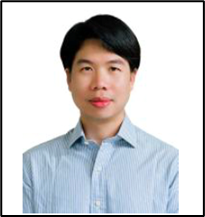
Prof. Chun-Hu Chen is a Distinguished Professor in the Department of Chemistry, National Sun Yat-sen University (NSYSU), Taiwan, and serves as Director of NSYSU’s Green Hydrogen Research Center, where he helps bridge fundamental materials chemistry with deployable hydrogen technologies. He earned his Ph.D. in Chemistry (2010) from the University of Connecticut (USA) and then pursued postdoctoral research at The Ohio State University (2010–2012). He joined NSYSU in 2012, progressing from Assistant Professor (2012–2017) to Associate Professor (2017–2020) and Professor (2020–present). He was also a visiting scholar at Northwestern University (2018). Prof. Chen has received multiple recognitions for research, teaching, and industry impact, including Outstanding New Faculty Award (2012), Young Faculty Award of Industrial Collaboration (2015), Excellent Teaching Award (2015), Excellent Research Awards (2015–2025), Award of Industrial Collaboration (2019), Innovative Young Scholar Award (2020), Excellence Award of Industrial Collaboration (2021), and the Award of Outstanding Young Scholar from the Carbon Society of Taiwan (2021). His team focuses on graphene chemistry and electrochemical water splitting for clean hydrogen generation. A hallmark contribution is the development of Acidic Redox-assisted Deposition (ARD)—a versatile, solution-based method that forms strongly adherent, multi-metal oxide/oxyhydroxide thin coatings on a wide range of substrates (including metals, ceramics, and plastics), enabling robust electrochemical interfaces and scalable manufacturing routes. In recent years, Prof. Chen has also led efforts toward electrolyzer prototyping and scale-up, including an NSYSU-reported prototype alkaline seawater electrolyzer for hydrogen production, advancing pathways from laboratory materials to real-world green-hydrogen systems. §
Professor Joel Garcia
Department of Chemistry, De La Salle University
Switching on Contrast, Greening Up Nanoparticles: Smarter Chemistry for Better Imaging
Magnetic resonance imaging (MRI) would benefit from contrast agents that are both safer and responsive to their chemical environment. This work presents two complementary strategies. First, we use spiropyran molecular photoswitches as small, modular sensors that convert light or specific metal ions into changes detectable by MRI. In water, these switches reversibly toggle between forms with distinct optical and coordination properties, enabling naked-eye Cu²⁺ sensing and modest, reproducible light-controlled changes in relaxivity when grafted onto gadolinium chelates. Simple structure, response rules, linker length, donor groups, and accessible binding sites guide the design toward reliable cycling and minimal interference. Second, we advance manganese-based nanomaterials as greener alternatives to gadolinium. Poly(acrylic acid)-stabilized Mn₃O₄ nanoparticles are prepared under mild, aqueous conditions, providing strong positive MRI contrast while avoiding gadolinium-related safety concerns. Together, these approaches outline a practical, chemistry-first route to responsive imaging: pair stimuli-switchable small molecules that encode specificity with biometal nanomaterials that deliver robust signal and sustainability.
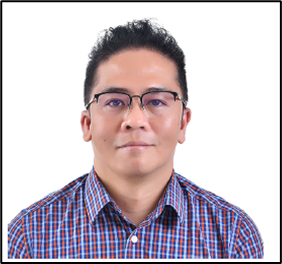
Dr. Joel Garcia is a Research Fellow and Full Professor of Chemistry at De La Salle University, Manila, and a Board Director of the Kapisanang Kimika ng Pilipinas (KKP). He earned his B.S. in Chemistry from the University of the Philippines Diliman and completed his Ph.D. in Inorganic Chemistry at Wayne State University (USA) under the guidance of Prof. Matthew J. Allen, investigating the physical properties of air-sensitive europium(II)-containing compounds relevant to magnetic resonance imaging (MRI). As a postdoctoral researcher in the UC Davis Biomedical Engineering department, he collaborated with Prof. Angelique Y. Louie on the development of activatable MRI contrast agents utilizing nanoparticles and small molecules. His current research integrates green chemistry with nanomaterials design to develop sensing and imaging agents and explores the metabolic profiles of agarwood and traditional beverages. §
Professor Christine C. Hernandez
Institute of Chemistry, University of the Philippines, Diliman
Tuklas Lunas Drug Discovery and Development Program
The Tuklas Lunas Drug Discovery and Development Program is a national research initiative of the Philippine Department of Science and Technology (DOST) that aims to advance the discovery of therapeutic products derived from the country’s diverse natural resources. Anchored on the strategic use of indigenous terrestrial and marine bioresources, the program seeks to generate safe, effective, affordable, and locally developed drug leads and health products that address priority diseases and strengthen the national health innovation ecosystem.
Tuklas Lunas employs a comprehensive and translational research framework that spans bio-prospecting, compound isolation, biological screening, formulation development, and pre-clinical evaluation. A distinguishing feature of the program is its dual-track approach: one track focuses on the development of standardized herbal drugs and natural health products, while the other targets the identification of purified bioactive compounds with potential for advanced pharmaceutical development. This structure enables flexibility in outputs, ranging from herbal medicines and functional products to novel drug candidates suitable for licensing or further clinical development.
The program is implemented through a network of Tuklas Lunas Development Centers, strategically located in academic and research institutions across the country. These centers serve as hubs for interdisciplinary collaboration, capacity building, and technology generation, bringing together experts in chemistry, biology, pharmacology, and related fields. By supporting multi-institutional projects, Tuklas Lunas also promotes regional research development and strengthens local scientific capabilities. Since its establishment, the program has supported numerous research projects aligned with national health priorities, contributing to the identification of promising natural product leads and the advancement of herbal formulations toward regulatory readiness. Through sustained government support and partnerships with industry and other stakeholders, Tuklas Lunas aims to bridge the gap between laboratory research and product development, ultimately contributing to improved public health outcomes and a more resilient domestic pharmaceutical and biotechnology sector.

Christine C. Hernandez is a professor of Chemistry at the University of the Philippines Diliman. She obtained her BS, MS, PhD in Chemistry from the same institution. She finished her PhD in Chemistry in 2006 under a sandwich program and did her dissertation at the Department of Biological Chemistry and Molecular Pharmacology, Harvard Medical School under the guidance of Dr. Jon C. Clardy. She did postdoctoral work at The Scripps Research Institute, La Jolla CA; University of California Santa Cruz and Meiji Pharmaceutical University Japan. Dr. Hernandez was conferred the title of University Scientist in 2012 under the UP Scientific Productivity System having published papers in natural products chemistry. She is an active researcher in the field and has Department of Science and Technology. Dr. Hernandez held several administrative positions at the University of the Philippines Diliman and served as Director of the Institute of Chemistry in 2017-2020. She is currently the director of the Office of Scholarships and Grants, University of the Philippines Diliman. §
Rosalie R. Rafael, PhD
Chief Executive Officer
Agqua Veterinary Medicine Manufacturing
From Waste to Wealth: Propre Boost as a Sustainable Probiotic and Prebiotic Solution for Feed and Agriculture Systems
The global food and agriculture sectors are confronted with escalating challenges, including the accumulation of agricultural waste, increasing production costs, declining farm productivity, and intensifying pressure to adopt environmentally sustainable and commercially viable solutions. These challenges threaten food security and economic resilience, particularly in developing economies where resource efficiency and innovation are critical to sustaining agricultural livelihoods.
In response, PROPRE BOOST represents a novel, industry-driven biotechnology innovation that transforms agricultural waste into high-value probiotic and prebiotic feed additives for aquaculture and livestock systems. By converting crop residues and other agricultural by-products into functional bioactive inputs, PROPRE BOOST addresses both waste management and productivity enhancement while supporting circular economy principles. The technology was developed through a strategic collaboration among Central Luzon State University (CLSU), the Department of Science and Technology–Philippine Council for Agriculture, Aquatic and Natural Resources Research and Development (DOST–PCAARRD), and Agqua Veterinary Medicine Manufacturing (Agqua VMM). Grounded in the principles of biochemistry and natural products chemistry, the innovation utilizes agricultural residues rich in prebiotic compounds as substrates that support probiotic activity within the gastrointestinal systems of fish and livestock. The resulting products enhance nutrient utilization, immune response, and overall production efficiency across multiple commodities.
Field validation and pilot-scale deployments demonstrated strong technical and commercial viability. Tilapia farms recorded a 29% increase in production volume and a 125% increase in farmers’ income, while positive outcomes were also observed in shrimp, catfish, poultry, goats, and selected crop systems. These results underscore the scalability and cross-sector applicability of the technology. The project followed a comprehensive commercialization pathway, encompassing laboratory development, field trials, pilot manufacturing, market testing, and business model establishment. Industry engagement enabled formulation refinement, cost-efficiency improvements, distribution planning, and continuous market alignment. Ongoing regulatory compliance, including feed product registration certification and patent applications, further supports readiness for large-scale adoption. Beyond technological innovation, PROPRE BOOST contributes to inclusive and sustainable development by generating additional income from agricultural residues and creating livelihood opportunities for farmers and out-of-school youth. As a model of effective university–industry partnership, PROPRE BOOST delivers a scalable, sustainable, and socially responsive solution to global food system challenges.
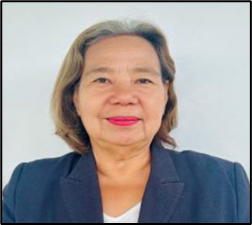
Dr. Rosalie R. Rafael is a retired professor of Central Luzon State University (CLSU) with over 42 years of service as an educator, researcher, and science-based entrepreneur. She earned her Ph.D. in Science Education (Chemistry) and M.S. in Teaching (Chemistry) from De La Salle University, and her B.S. major in Chemistry from Far Eastern University. Dr. Rafael taught undergraduate and graduate courses in Chemistry and related disciplines, adopting an interdisciplinary approach that integrated Biochemistry, Natural Products, and applied chemical sciences to support students in Veterinary Medicine, Fisheries, Agriculture, Food Technology, Environmental Science, Biology, and Chemistry. Her research leadership included serving as project and program leader for multiple externally funded initiatives supported by CHED, DOST–PCAARRD, and DOST–PCIEERD, with a sustained focus on the valorization of agricultural waste and the development of sustainable technologies. She is the founder and Chief Executive Officer of Agqua Veterinary Medicine Manufacturing Co., which developed Propre Boost, a probiotic and prebiotic product derived from agricultural waste for aquaculture, agriculture, and veterinary applications. This innovation exemplifies the successful translation of academic research into environmentally sustainable solutions that enhance productivity and support farming communities. §
💯 Conference Sponsors