KKP-TSU Conference 2026: Green Chemistry for a Changing World: Empowering Sustainable Communities
Date: 23 & 24 February 2026
Venue: Tarlac State University, Lucinda Campus, Tarlac City
Felicidad Christina R. Peñafiel, PhD
Department of Chemistry, University of Santo Tomas
Green Chemistry Sparks: Engaging Students with Microscale Electrochemistry Experiments
This workshop will focus on introductory electrochemistry experiments using simple equipment and chemicals that participants can easily replicate in their own classrooms or school laboratories. The hands-on experiments cover topics such as electrochemical cells and battery formation, electrocoagulation, fractal formation, and electrochemical writing, all aimed to pique students’ interest. This workshop is based on the CHED-KKP Workshop: Electrochemistry experimentation at the microscale level by Professor Emeritus Jorge Ibañez of Universidad Iberoamericana, Mexico, during the 38th Philippine Chemistry Congress in 2024.
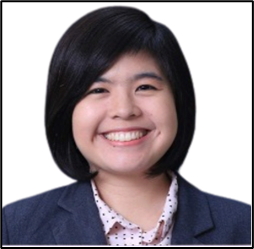
Felicidad Christina Peñafiel finished her Ph.D. major in Chemistry degree at the University of Santo Tomas. Her research interests include conducting polymers, composite fabrics, and energy storage materials. She is currently a professor in the Department of Chemistry, College of Science, and a researcher at the Research Center for Natural and Applied Sciences, University of Santo Tomas. §
Alan Rodelle M. Salcedo, PhD
Department of Chemistry, University of Santo Tomas
Sustainable Chemical Measurements and Green Chemistry Education Through Smartphone-Based Colorimetry
This workshop presents smartphone-based colorimetry as a sustainable, accessible, and innovative approach to chemical measurements and green chemistry education. Participants will explore how smartphone cameras, coupled with digital image analysis, can be used to monitor colorimetric reactions and quantitatively determine analyte concentrations in various samples. The session emphasizes green chemistry principles by minimizing chemical consumption, reducing reliance on energy-intensive instrumentation, and utilizing readily available technology.
Through guided demonstrations and practical examples, the workshop will discuss key concepts such as color models, calibration strategies, data processing, and sources of analytical error. Applications in chemical education, environmental analysis, and community-based monitoring will be highlighted, illustrating how smartphone colorimetry can enhance student engagement, promote inquiry-based learning, and empower sustainable communities. This workshop provides participants with practical knowledge and adaptable strategies for integrating smartphone-based analytical techniques into teaching, research, and outreach initiatives aligned with green chemistry goals.
Rationale and Background
Conventional analytical measurements often rely on expensive, energy-intensive instruments that may not be readily available in many educational institutions and community laboratories. Smartphone-based colorimetry offers a sustainable alternative by utilizing widely available mobile devices as analytical detectors for colorimetric reactions. This approach aligns strongly with green chemistry principles, particularly in minimizing resource use, reducing waste, and promoting accessibility. In chemical education, smartphone colorimetry serves as an effective tool for enhancing student engagement and supporting inquiry-based and outcomes-based learning. Beyond the classroom, it enables community-based and environmental monitoring applications that empower local stakeholders through accessible analytical capabilities.
This workshop builds on the proponents’ previous experience in conducting hands-on training on smartphone-based colorimetric analysis and aims to further integrate sustainability, education, and analytical rigor in a single, cohesive learning experience.
Workshop Objectives The workshop aims to: (1) Introduce the principles of smartphone-based colorimetry as a sustainable analytical technique; (2) Demonstrate the use of smartphone cameras and digital image analysis for quantitative chemical measurements; (3) Equip participants with practical strategies for implementing smartphone colorimetry in teaching, research, and community-based applications.
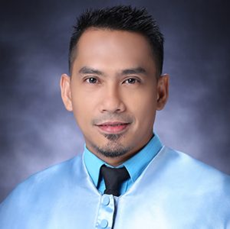
Assoc. Prof. Alan Rodelle M. Salcedo, PhD, is Chair of the Department of Chemistry and an Associate Professor at the University of Santo Tomas College of Science, where he also conducts research as part of the Chemical Sensors and Biosensors Laboratory at the Research Center for the Natural and Applied Sciences. Dr. Salcedo earned his BS Chemistry, MS Chemistry (Cum Laude), and PhD in Chemistry (Summa Cum Laude) from the University of Santo Tomas. His research interests include analytical chemistry, green-synthesized micro- and nanomaterials for chemical sensing, smartphone camera-based colorimetric sensing systems, gas sensors, and mercury sensors. He has published extensively in peer-reviewed journals and has received awards including the Outstanding Scientific Paper Award from the National Academy of Science and Technology Philippines and the St. Albertus Magnus Award. Dr. Salcedo is active in professional organizations such as the Kapisanang Kimika ng Pilipinasand serves on its Board of Directors, contributing to the advancement of chemistry education and sustainable analytical practices. §
Emmanuel V. Garcia, PhD
Department of Chemistry, De La Salle University
Coffee Chemistry and the Concept of Sustainability
Coffee has been experiencing a renaissance in recent years, particularly among young adults. Along with the rise in popularity of “specialty coffee”, events, methods, techniques, and technology abound, fueled by the demand from curious coffee aficionados and professionals alike. This curiosity emerged as motivation for the establishment of contextualized learning in academic institutions, aiming to use coffee as a tool for science literacy, critical thinking, and the United Nations’ Sustainable Development Goals (UN SDGs). Not surprisingly, such programs grew in popularity as well. However, the main proponents of some of these programs feel that students who complete the programs, whilst learning scientific concepts in a fun and engaging manner, still miss realizing the more profound concepts under the UN SDGs. In this workshop, participants will undergo snippets of these programs to help in the determination and/or identification of the possible causes of such gaps.
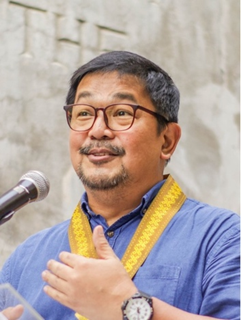
Emmanuel V. Garcia is an assistant professor at the Chemistry Department of De La Salle University Manila, where he also earned his degrees in Chemistry from bachelor to doctorate level. He is currently the director of the La Salle Food and Water Institute, which allows him to fuse together his passion for coffee science and interest in food bioanalytical research while simultaneously advocating for chemistry education especially on these two fields of study. He has been an active science educator, who once served as the president of the Philippine Association of Chemistry Teachers in 2016, and has conducted several seminars and workshops on science teaching across the country throughout his professional years. He aims to support the development of the coffee industry in the Philippines through his research pursuits as manifested by his previous publications on coffee. Dr. Garcia’s work has been instrumental in bringing together coffee industry stakeholders to improve coffee quality, culture, and economy. He served as the chair of the Philippine Coffee Guild from 2023-2025, and is recognized for his contributions to the coffee industry and education. His present study focuses on the application of stable isotope techniques for origin identification and traceability of coffee and cacao beans in the Philippines. §
Engineer Marlon Llana, MSc
Technical and Operations Director
Nanotech Analytical Services and Training Corporation (NASAT)
SIGMATECH Incorporated
Experience the Hitachi Tabletop SEM
This hands-on workshop will introduce participants to the Hitachi TM4000 Tabletop Scanning Electron Microscope (SEM) and its applications in research and teaching across various disciplines. The session will cover the fundamental principles of SEM, key instrument components, and practical operation of the TM4000, demonstrating its ability to produce high-resolution images with minimal sample preparation. Participants will gain firsthand experience in sample mounting, imaging, and basic analysis workflows, exploring diverse applications such as material characterization, biological sample imaging, and surface morphology studies. The workshop highlights how tabletop SEM technology enables accessible, efficient, and versatile microscopy for both students and researchers.”

Engr. Marlon Llana has a B.S. and a master’s degree in chemical engineering from Mapua Institute of Technology and is a PhD Candidate for Material Science and Engineering. He has over 20 years of experience in the semiconductor industry in the field of Quality, R&D, Laboratory Operation, Electro-plating, Failure Analysis, and Reliability having worked for Philips Semiconductors, SunPower Mfg. Ltd., International Rectifier, and DECA Technologies. He is a former faculty at Malayan College Laguna, Lyceum of the Philippines Laguna, and Colegio de San Juan de Letran having taught for more than 14 years. He is also a technical assessor of DTI-PAB for ISO/IEC17025 and is a member of the DTI Technical committee for nanotechnology. §
💯 Conference Sponsors